Have you ever said something and thought, “Wow, that was really good. I was really on to something there.” I recently had one of these moments. Feeling rather proud after I said it, the conversation ended and I thought, “I better go back and review the play.” First of all, someone else (my ego says perhaps a famous philosopher, writer, or dead person) has probably previously said what I just said, but even better. Secondly, I need to figure out whether I actually believe what I just said. Not just- “Do I like how it sounded in that moment?”
(The reader asks, “Well, are you going to tell us what you said?”)
What I said was, “Resilience is not the absence of challenges, hardships, or big feelings.” *Gasp* I know, right?
After a quick search, I couldn’t find a single well known quote to match mine. I found over ONE HUNDRED variations of essentially the same idea from various sources. What could be occurring here is either Zeitgeist or Cryptomnesia. Zeitgeist, borrowed from German, means the “spirit of the times.” It describes how the “climate” of an era makes certain ideas “ripe” to be discovered by many people simultaneously.
Could the climate of our times be enlightening us to something we need to remember about resilience?
Hmmmm.
Alternatively, here’s a new psychological term for us all: cryptomnesia. Cryptomnesia occurs when you truly believe you have an original idea, but your brain is actually just recycling a forgotten memory or something you saw or heard in the past.
You decide.
I digress.
Back to examining whether I actually believe what I just said.
On this point, I could wrap up this short story with this question: What if we all examined the beliefs behind what we proclaim?
More hmmms.
For context, my mind blowing statement was an answer to this question: “How do we build resilience in our child?” Perhaps we shouldn't begin with, How do I make my child more resilient? Perhaps, if we examine our beliefs as I propose, we could begin with, What do I believe resilience actually is?
One of my favorite Garry Landreth quotes gets me thinking about this in a particular way:
“Some children are like popcorn. Others are like molasses.”
Landreth, a pioneer in play therapy, used this metaphor to describe the vastly different ways children move through the world. Some children are quick, energetic, expressive, and ready to jump from one thing to the next. Others are slower to warm up, more deliberate, cautious, and internally processing. And some children, of course, don't fit neatly into either category. The point is that children are different. Adults must accept these differences without trying to rush or fix them.
Perhaps sometimes our ideas about resilience accidentally turn those differences into problems.
We want the popcorn child to slow down.
We want the molasses child to speed up.
We want the anxious child to stop worrying.
We want the angry child to calm down.
We want the child having big feelings to handle them better.
We want the behavior to change.
What if it’s true that resilience isn’t the absence of challenges, hardships, or big feelings? What if resilience is the developing capacity to experience challenge, stress, disappointment, frustration, fear, anger, and other big feelings and eventually find our way through them? That doesn't mean children need to experience overwhelming or traumatic stress in order to become resilient. We need to understand resilience in context of the brain and nervous system.
When children face small, manageable challenges and then experience safety after and during the stress, the nervous system strengthens its ability to bounce back. Tolerable stress and predictable relational safety and connection are the building blocks of resilience. A regulated adult presence helps wire a child’s nervous system for safety, which builds their internal ability to self-regulate later in the face of distress.
Children develop resilience within relationships where there is enough safety, connection, support, and opportunity to experience manageable challenges and recover from stress. Over time, these experiences contribute to a child's growing capacity to regulate, adapt, problem-solve, and tolerate distress.
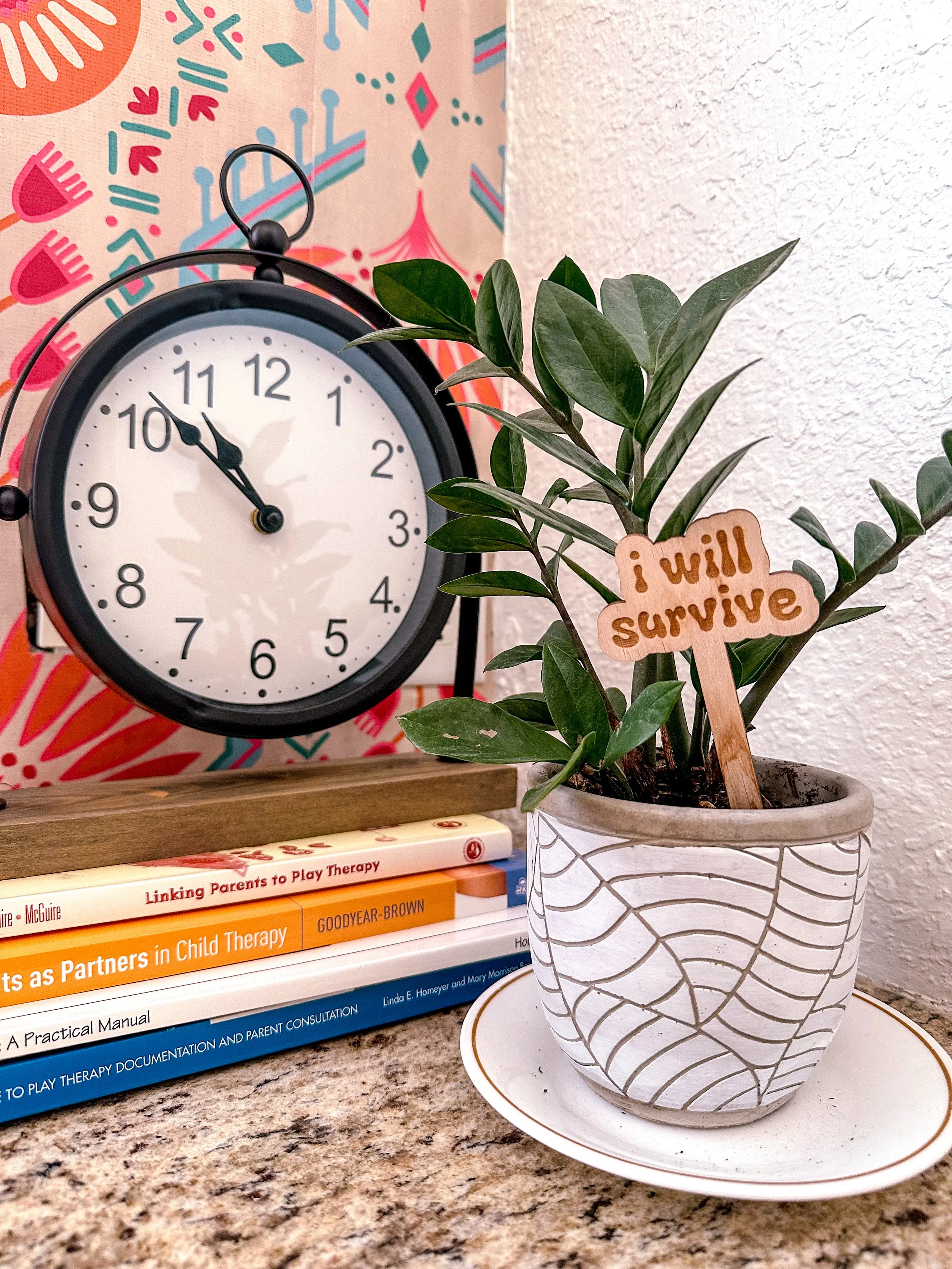
Resilience is not the absence of challenges, hardships, or big feelings.
And I stand by my words.
I dare you to quote me.
I double dog dare you to share this article.
Written by Kelly Martin