




Your Custom Text Here

Many parents would agree that honesty and truthfulness are essential virtues to pass to their children. Defining honesty can be subjective. Different cultures may place varying emphasis on honesty and truth-telling— depending on social norms, values, and factors within a community—which influences how parents prioritize it. Generally, honesty is considered a positive value, but the nuances of how and when to tell the truth can vary depending on cultural context. For example, some cultures may prioritize directness while others prioritize social harmony and feelings of others over absolute honesty.
As children develop cognitively, parents may feel challenged in knowing how to respond to both a blossoming imagination and to lying while also instilling the virtue of honesty. Parents may be tempted to use correction and discipline as a first response to an alleged lie. As with all behavior, let’s dig beneath the behavior of lying and storytelling to understand the function of both and your child’s needs. It’s important to differentiate between playful storytelling and deliberate attempts to deceive—which serves a function!
Storytelling, and more specifically for the purpose of this blog post, telling tall-tales refers to children telling exaggerated stories using vivid imaginations to embellish experiences. They are a typical part of childhood development and are a fun way for children to explore communication, language skills, and creativity without necessarily intending to deceive. During early childhood, imaginative play is a significant part of their lives. They might blur the lines between reality and fiction. Tall-tales don’t need to be treated as a lie.
Lying is communication wherein children use language to say something different than either what they believe or than what they are experiencing. The intent is to deceive for a purpose: access to attention; access to a tangible item, for escape, or for stimulation.
Would you believe me if I said that six-year-olds lie on average every hour! (The University of Waterloo conducted research that found 96% of young children lie at some point. They are currently seeking research participants ages 8-11 to examine prosocial lies).
Access to attention: some children who use typical story-telling may begin to notice their story-telling being a means to connection or attention. Others around them may reinforce and “reward” the story-telling by laughing, paying more close attention, or asking for more. Parents may want to consider their child’s sources of connection, show the same level of enthusiasm and attention to everyday stories, and label grandiose stories like this: “That is an interesting story you created for your day today.”
Sometimes “escape” is a function of dishonesty in order to protect a child—whether it’s to protect their physical safety, their ego, their relational safety, their autonomy, or their sense of “okay-ness.” These lies may show up in a situation that a child made a mistake, feels embarrassed about, is trying to protect, or feels disempowered. “Escape” may show up as children and teens seek independence, assert their autonomy, and make decisions.
Children will also “escape” the discomfort that comes from receiving a consequence, feeling separated from a relationship, or any of the negative feelings that might come from a situation they are avoiding. For a child who tells a lie as a function to escape, parents can reduce the need to escape. It might look like validating their thoughts and feelings, problem solving with them, and delaying an immediate consequence. Many parents will tell their child “I won’t be mad if you just tell me the truth,” First children need to feel relationally safe in their negative emotions with their parent. Oftentimes parents skip past emotions a child might be feeling, leaving a child to work through or try to understand their emotions by themselves. Acknowledging a child’s feelings does not mean that a parent agrees with or approves of a behavior—and it certainly won’t reinforce an undesirable behavior. Children need to experience emotional safety before they can rely on a parent’s response.
“It’s important not to ask a question when it should be a statement. If you know your child did something, asking it as a question only creates more of a window for dishonesty. Often times, kids can feel like we are setting a trap for them if we ask the question when we already know the answer. It is a way of modeling honesty ourselves when we own what knowledge we have.”
Children may lie to receive access to tangible items. If they learn that being dishonest gets them access to something, they will use that strategy to get what they want or need. Has your child ever lied about completing a chore only to find them playing their video game? First, make a statement, then use the ACT Limit Setting model by Garry Landreth in this scenario. It could sound like this: “I’m noticing the sink isn’t clean. (Acknowledge the feeling) You really wanted to hurry and play your game—cleaning the sink feels gross and boring for you. (Communicate the Limit) The video game is not for playing until your chore is done. (Target an alternative). You can choose to use this glove and clean the sink or choose to put on music while you do it.” If providing choices and problem solving isn’t working, you can communicate a final limit: “If you choose to not complete your chore, you choose too not play your video game today.”
Lying can also be a way for a child seeking more sensory input. For example, a child might say they don’t have homework to do so that they can play outside with their friends after school (both sensory input and a social need). Consider the function of lying as opportunities for children to either access the sensory input their bodies are craving or to limit the amount of sensory input for their nervous and sensory systems to reach homeostasis.
While we discussed 4 functions of lies, not all lies have an intentional purpose to deceive. We also need to consider typical cognitive development of children. Children’s understanding of truth and falsehood evolves as they grow. The development of “theory of mind” allows children to understand that others have different thoughts and beliefs—meaning they can create a story different from reality. Basic theory of mind abilities begin around ages 3-4. You can “test” your child’s developing theory of mind by playing hide and seek with them. If your child delights in telling the seeker exactly where they plan to “hide,” they have not fully developed theory of mind. There is significant executive function development in the brain between ages 3-5 and continuing throughout adolescence and early adulthood. Children ages 3-5 develop focus, inhibition, and simple planning. Children ages 6-11 develop more complex planning, working memory, and flexibility. Adolescents ages 12-18 refine executive funtion skills including time management, prioritizing tasks, and adapting to new situations. Lying also serves a purpose to learn about cause and effect: children are naturally curious about the world around them and may experiment with reactions and testing boundaries.
Generally, parents are concerned about lying in children because they want their child to develop empathy and to behave morally. Children’s ability to understand the feelings of others (empathy) develops gradually. Early on they may not fully realize the impact of their lies on others. Parents are the best models of empathy as they help children understand their own feelings. Chidlren’s sense of morality also develops over time. It takes time for children to learn honesty and its role in maintaining trust and relationships. Ultimately we want to raise humans who have a sense of self-love, self-esteem, and self-confidence.
“The importance is that we can discern WHY we are lying, whether it is appropriate based on our instilled values or an avoidant/harmful reaction that requires accountability, responsibility, and making amends.”
How do you deal with childhood lying? While there is no formula for raising capable, resilient, and confident children, there are several things to consider.
Consider child development. Consider your child’s developmental age, not chronological age. What is typical for this developmental age?
Connect before correct. This requires for the parent to do an internal check and remain outwardly composed to communicate safety and to facilitate eventual open communication.
Curiously dig beneath the behavior of lying
Make a statement or state facts about what you’re noticing
Is it acceptable for a parent to express theirdisapproval of intentional lying? Parents certainly can tell their child that honesty is an important value and how it can hurt trust in relationships. It can sound like “In our family, it’s important to know that we can tell the truth to each other so that we a figure things out together.” Children must experience THE PARENT as a safe person to tell the truth to. Parents can model honesty in their own actions and interactions. For example: “I made a mistake in a report I wrote for work today. I told my boss so we could fix it.” Discuss honesty as a core family value and the natural consequences of lying.
What are other ways to confront lying?
“I’m so glad you told me what happened. Let’s work together to sort things out.”
“I noticed that seems a bit different from what you told me. Can you help me understand what really happened?”
“Hey, I’m going to the kitchen to do some dishes. I’ll come back to see if you decide to change your answer to what happened. This is just a truth check.”
For adolescents: “You’ve gotten yourself into a really bad position. You are managing that position by lying to yourself which also involves lying to me. I’m going to set aside the ‘lying to me’ part for now, but you’ve got to figure out how to fix the problem you’ve created for yourself, and I’m here to help you.” (By Lisa Damour)
Other resources:

Parents and caregivers are an integral part of a child or teen’s therapeutic journey.
Collaboration with your child’s therapist includes parent consultation sessions and communication that are best enhanced by openness, trust, and mutual respect . We understand the vulnerability you may feel as a collaborator. You are an integral part of this process.
Consistency in the therapeutic process sets your child up for positive outcomes. This includes consistent communication with the therapist, consistent scheduling, appointment keeping, and consistent application of learned strategies.
Therapy is quite an investment. It’s an investment in time, finances, and emotions. It’s crucial to have an understandingof the purpose and goals of the process and of any therapeutic intervention. Your therapist has the responsibility of providing that information and you have the responsibility of asking questions, seeking the information that you need, and advocating for yourself and your child.
There is no doubt the therapeutic process can feel uncomfortable and challenging for both you and your child in order for growth to emerge. As long as the process and therapist feel safe, you have an understanding of the intervention, you feel respected and valued, and the process will serve your child’s needs , you have a choice to make a commitment to the process. This is a time, financial, and emotional commitment. At any time you can discontinue the therapeutic process. We just ask to be mindful of your child and to collaborate with your therapist on how to best transition away from the process.
Finally, responsiveness is a key ingredient to positive outcomes: responding to and integrating that which you’re learning in the process and to therapist feedback and insights. The therapy process is not your child’s to tackle alone. For best outcomes, your responsiveness is not only welcomed, but necessary.

A couple of weekends ago I reunited with friends who live in south central Colorado—also home to both active and inactive mines of copper, gold, iron, and lead. As we hiked through the woods and dry river beds, one of my friends told a story about his excitement uncovering a speck of gold while exploring on a previous hike. When he examined the gold more closely, he removed his polarized sunglasses to humbly discover it was most definitely not gold. As he finished telling the story we all laughed, and I said that there was a lesson in that for all of us—to ask ourselves what do we see with polarized vision? If I have your attention, keep reading below…

Polarized sunglasses use a chemical filter to block horizontal light waves (glare) while allowing vertical light to pass through. Polarization divides. Polarized lenses provide more clarity since the glare is removed, but objects may be a bit darker than usual. Psychologist George Kelly observed that our beliefs are like pairs of reality goggles (or in this case, polarized sunglasses). We use them to make sense of the world and to navigate our surroundings. Our differences are due to how we interpret and predict the world around us. We develop personal constructs and a threat to these will crack our polarized sunglasses—leaving our vision blurred. George Kelly noticed that rather than trying on a different pair of “goggles,” we twist and turn until we find an angle of vision that keeps our current views intact. With polarized lenses, if you tilt your head sideways, the horizontal glare will pass through the glasses, making the surface look brighter. See example of head tilt below. ;)

Continuing on…we tend to interact with people who share our beliefs. Group polarization is a social psychology phenomenon where one’s opinions and attitudes are amplified by involvement in a group. “Peripheral members of a group fit in and gain status by following the lead of the most prototypical member of the group, who often holds the most intense views.” (Adam Grant in Think Again). Psychologists further find that many of our beliefs are cultural truisms: widely shared, but rarely questioned. Group polarization is found in the world of politics; investment decisions; social media platforms; academic environments, and parenting practices to name a few.

Back to my original question: What do we see with polarized vision? What is being divided? What’s the key to living in unity yet celebrating individuality? How can we collectively and colorfully coexist and embrace change? I do not possess those keys—but I find answers in nature (see above); I read books; I ask questions; I listen; and I remove my polarized sunglasses. Let’s start with a values check below.
What are your values?
Mark Manson in his book The Subtle Art of Not Giving a F*ck says it quite frankly:
“Good values are 1) reality-based 2) socially constructive, and 3) immediate and controllable
Bad values are 1) superstitious; 2) socially destructive 3) not immediate or controllable.
You’ll notice that good, healthy values are achieved internally. Bad values are generally reliant on external events.”
Brene Brown takes a deep dive into values and in the power of resetting. If you want to examine your values, she has a Living Into Our Values exercise that you can check out here.
How can you become Curious and Ask Questions?
“It’s a rare person who wants to hear what he doesn’t want to hear." Attributed to Dick Cavett
Update your personal constructs by getting curious and asking questions. “Growth is an endlessly iterative process.” Mark Manson.
On our hike I noticed these lovely flowering plants with velvety leaves. I asked out loud if they were safe to touch. Not only are they safe to touch, but I was informed that the Mullein leaves are “nature’s toilet paper.” So with my curious question asking, I now have ass saving information to utilize in the future.

With Whom Can You Engage in Reflective Listening?
The most effective way to help others open their minds is often to listen.” Adam Grant
“It’s easy to think we’re listening when we’re really not. Instead of listening we are often waiting for [the other person] to finish talking so that we can share a thought that came to mind soon after they got started. That’s not listening, that’s turn taking.” (by Lisa Damour from Emotional Lives of Teenagers)
And let me tell you, many adults are not even good at turn taking. Adam Grant in Think Again goes on to say “Listening well is more than a matter of talking less. It’s a set of skills in asking and responding. It starts with showing more interest in other people’s interests rather than trying to judge their status or prove our own.” Journalist Kate Murphy writes, “We can all get better at asking ‘truly curious questions that don’t have the hidden agenda of fixing, saving, advising, convincing, or correcting.”

I adore these twirly seedlings. They are whimsical and purposeful as the wind carries them to establish new life. If we are brave enough to remove our polarized sunglasses, we are opening ourselves to seeing new light pour in. We might notice the sparkly twirly seedlings. May we also be open to updating our values, asking questions, practicing reflective listening, and thus being carried to new ground to begin growing again.

n August of 2015 with a child starting Kindergarten and a two year old in tow, I opened the doors of the Playroom Lubbock. Just barely. The construction of my build out was not entirely complete, but with 7 clients and a fully furnished play therapy playroom, the grand adventure moved forward, evolved, and transformed over time. Each time a child steps inside our door I consider each one a grand adventure. Year 9 is full of possibilities, becoming, wondering, wandering, and finding our way along the way. Adventure was, is now, and awaits.
How would you complete this sentence: Adventure is______________.
For me, adventure is both a frame of mind and also a lived, breathed experience. Adventure is experiencing both being fully alive and fully human. Adventure comes in both small and large packages. It plays hide and seek in the unknown waiting patiently for us to bravely pursue it. Adventure can arrive to one recipient; can be shared amongst trusted humans; can be held and embodied by strangers sharing the same space and time; can be cultivated through a community willing to share in its delight; and can be discovered through the attributes and laws of nature.
The world breathes over me and anticipates for me to accept her offering of adventure. If only I pause to inhale, my exhale is my response and intention: to grab hold of the adventure (full of both uncertainties and wonder) OR to recognize when the adventure is not for me (yet or at all) and to let the wind carry it on.

Adventure is not without doubt, discomfort, mess ups, and second guesses. And when does adventure begin or end? After all it is not defined by the parameters of time. Adventure is in the preparation, it’s in the present, and it’s in hindsight.
Many of you may remember from previous emails that I embarked on an adventure to train for a triathlon this summer. The preparation most definitely contained doubt, mess ups, and second guesses. It also contained surprise, delight, confidence, and slow and steady progress. During the scheduled triathlon event, a new adventure emerged: physical, emotional, and mental fortitude.

And in looking back on the completed triathlon, I rediscovered the value of community and supportive friendships. If your people are not running the race with you, who is on the sidelines cheering your adventurous spirit on?

Lastly, adventure is transformative. The Middle English 1300s version (aventuren) meant “to risk the loss of.” You are not who you used to be before the adventure. By adventuring, are you willing to risk the loss of who you once thought you were? How can we view the subtle and drastic transformations in our lives as beautiful things?
For our birthday month at the Playroom Lubbock we want to offer opportunities for you and your child to experience adventure. One of my favorite memories of adventure as a kid included going to camp and making friendship bracelets. The rhythmic process of tying loops of thread felt comforting. Adventure is also found in the act of sharing, exchanging, and receiving of bracelets with others. For the remainder of the month current clients will receive a threaded friendship bracelet in honor of their adventure.

We have at least three more upcoming opportunities for adventure to offer our community (not exclusively for clients). Two of them are FREE. One is a reduced price!
Kids ages 4-10 can adventure on their yoga mats for a pop up Yoga Calm class where we will read Anna and Her Colored Yoga Mats—a book about friendship, happiness, and self-esteem.
We are collaborating with a new Lubbock business, Tutu School Lubbock, to host a FREE Pirouette Play Date for kids ages 18 months - 8 years old. Tutu School Lubbock is a boutique style ballet school that believes every child should have to opportunity to twirl, use their imagination, and develop their motor skills.
For adults working with or raising teenagers, we are hosting a FREE virtual discussion of the book “Emotional Lives of Teenagers” by Lisa Damour. Grab your copy and begin reading!

Check out our Events Tab for more details!

From Kelly Martin: The heart map is a craft idea to help your child who has anxiety about returning to school. Draw a large heart on the paper. Divide the heart into sections. In each section, draw pictures and write words of all the things that are great about school, focusing on the positive things that your child likes: friends, recess, Halloween parade, story time etc. While you are working on this craft, encourage your child to talk about what they enjoy. Acknowledge any of your child’s feelings that come up.
(*not an actual client’s work)
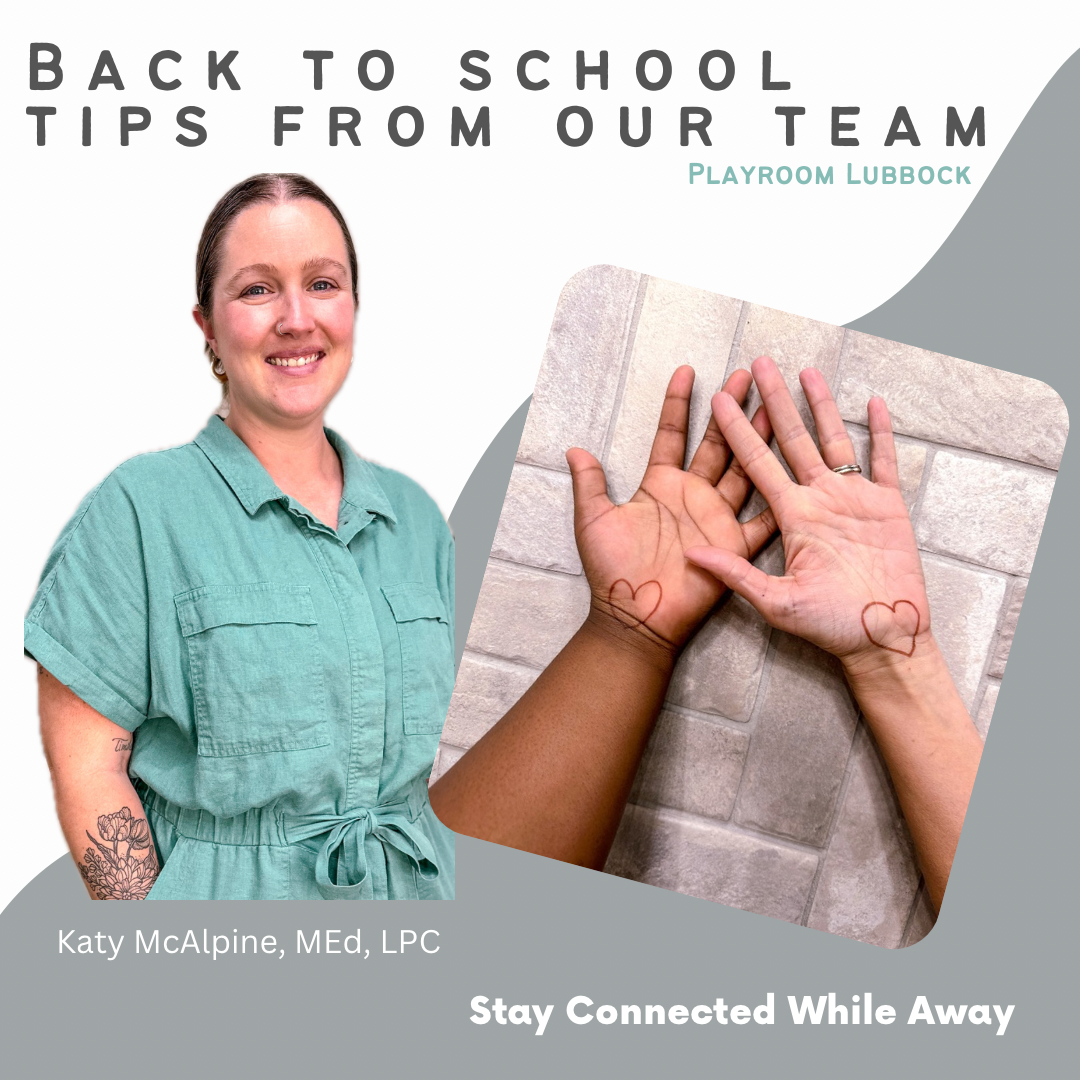
From Katy McAlpine: “If your kiddo feels anxious about being separated from you during the first day or weeks of school, here’s a tip to help them feel connected to you! With a pen or sharpie, draw a heart or other shape of choice on your child’s hand and one on your’s. Remind them that you’re always connected by your love for each other and when they need an extra reminder at school they can look down at their hand and see their heart. You can tell them that you’ll be looking at your heart today too and thinking about them❤️”

From our Graduate Student Intern Kathy: Arriving at school 10-15 minutes early each morning is a great way to build a connection with your child and create a positive association with school. Spend this time together playing fun games like I-Spy, Alphabet Hunt, Would You Rather or a simple word association. You can even create a morning scavenger hunt as you walk to the door. These moments can help your child feel more relaxed and associate school with fun, positive experiences.

Taylor Ballard provides this back to school tip: “Going back to school and getting reestablished in routine can bring on a lot of uncomfortable emotions. Anger, nervousness, anxiety, are emotions that can dysregulate our nervous system and make going back to school even more difficult. To help rebalance our nervous system, sometimes we need a bit of shock. This tip is simple yet can be very effective at doing what our body needs… it’s Ice! Putting an ice pack on our chest, chewing ice, taking a cold shower or bath, letting ice melt in our hand can help shock our senses and reset those intense emotions. Taking deep breaths and leaning into the uncomfortable cold helps us ground into the sensation instead of the emotion and we can have a clearer head in deciding how we want to move forward. Feel free to get creative in how you use ice or the cold to reset your or your child’s nervous system!”
.
Taylor of Tailored Therapy provides services inside Playroom Lubbock.

Today’s tip is by Shalea Addison of Rise Up Counseling Services in Seminole, TX. She also offices inside Playroom Lubbock. “A great way to provide stability for your family is to create daily rituals that build connection. Whether it’s having breakfast together, reading a bedtime story, or even taking a short walk after school, establishing a daily routine can strengthen your bond and allow you to connect with your child regularly. Start with a morning routine to help start your child’s day off right. Mornings can set the tone for the entire day!”
Prepare your child about going to therapy by explaining what will happen and why. Knowing what to expect will help alleviate anxiety. Let your child know that they can talk to you about how they feel about their therapist and the process. Discuss with your child’s therapy during the initial intake session about how to introduce your child to the therapy process. Take a look at these age by age guides.


Who knows the feeling when your child or teen talks back to you? Do you notice how your body responds?
Tune into your own body’s sensations, thoughts, and feelings.
Consider the need behind the attitude. Hungry, tired, overwhelmed, underwhelmed, in need of connection?
Respond to your child from a place of stability and clarity—not from a flood of emotion/thoughts.
Set boundaries and prompt kids to try again.
Try some of these responses below—different strategies will fit different kids and situations. How we respond to and treat people (including our own children) matters!



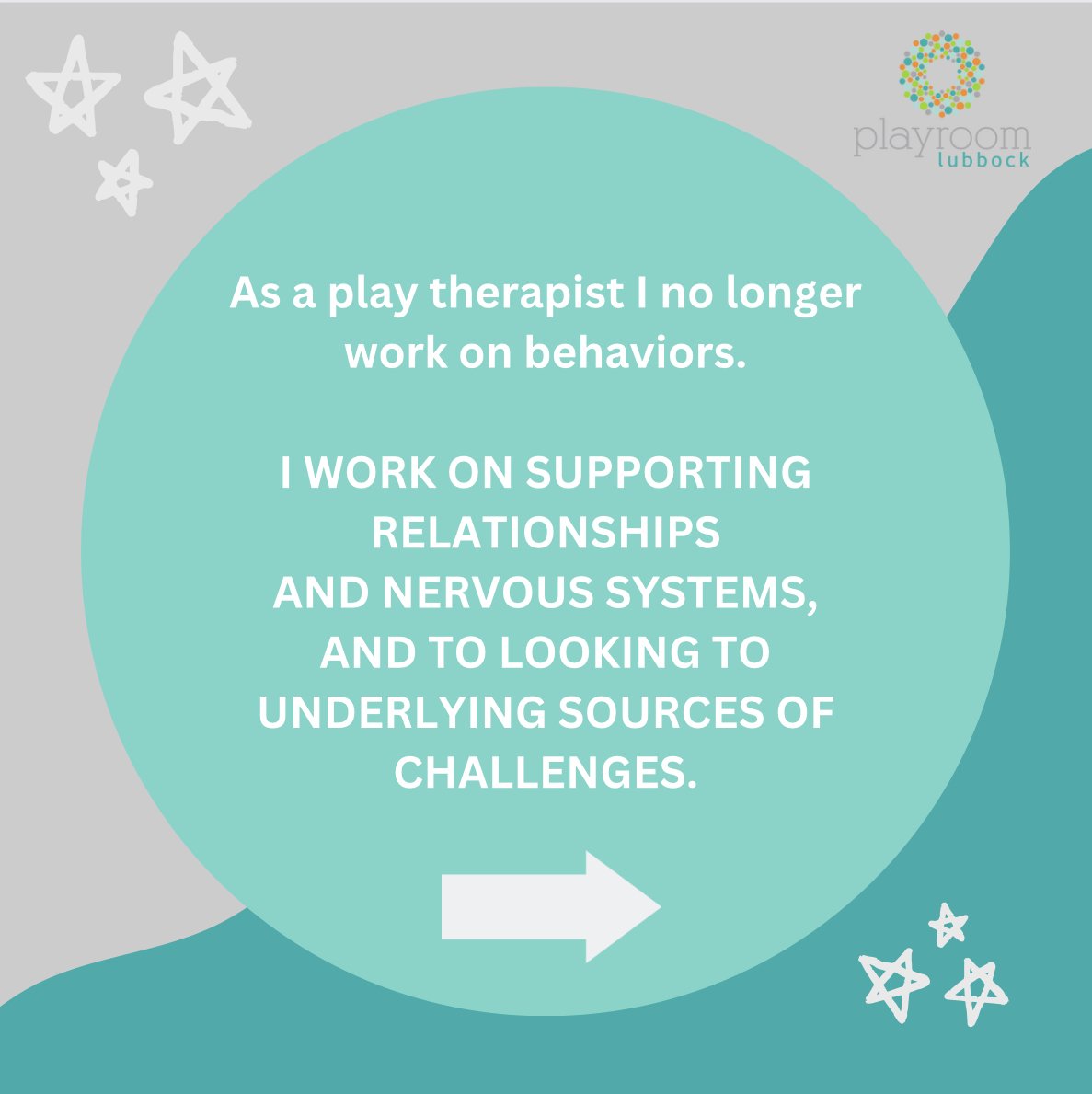
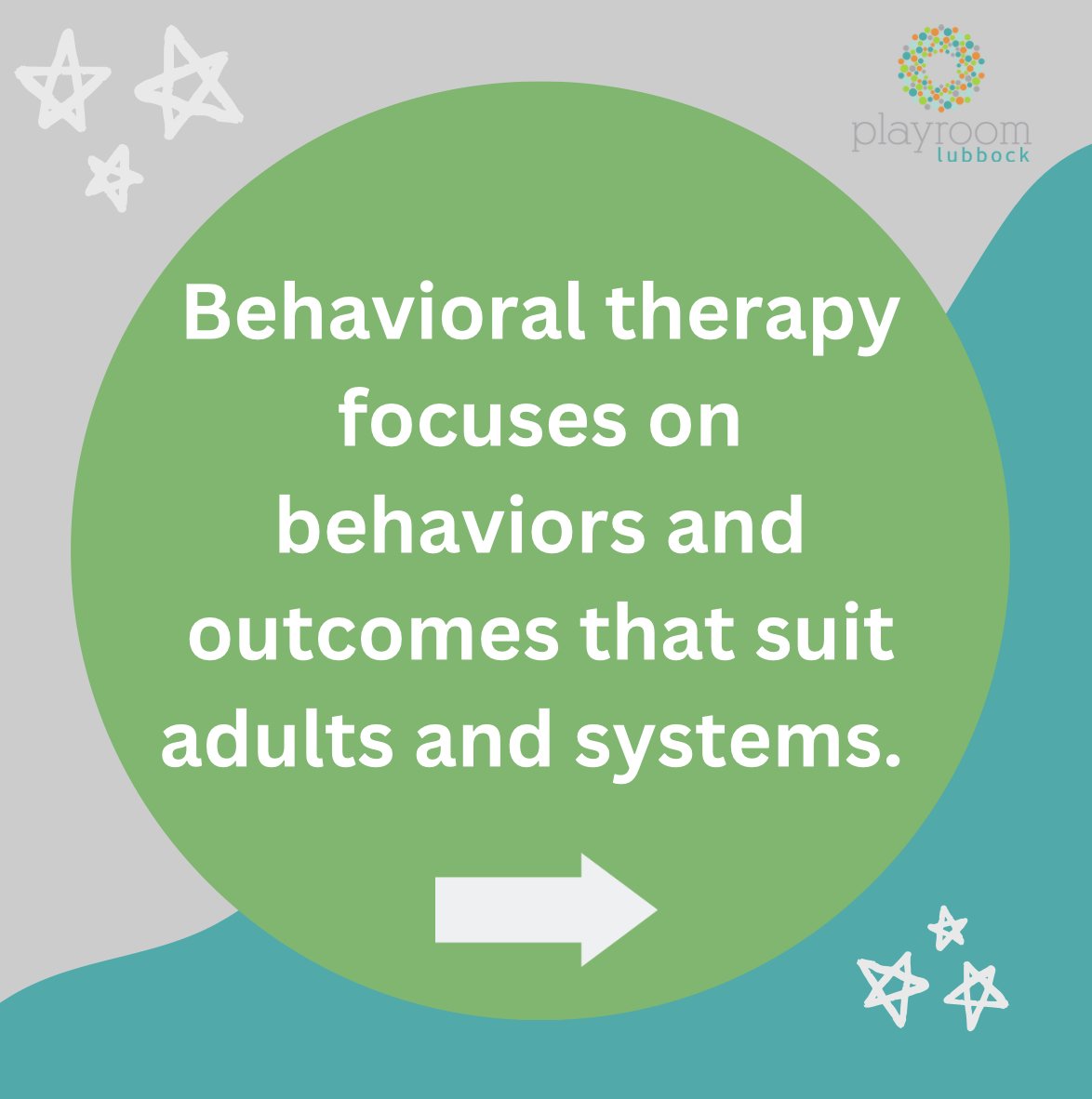
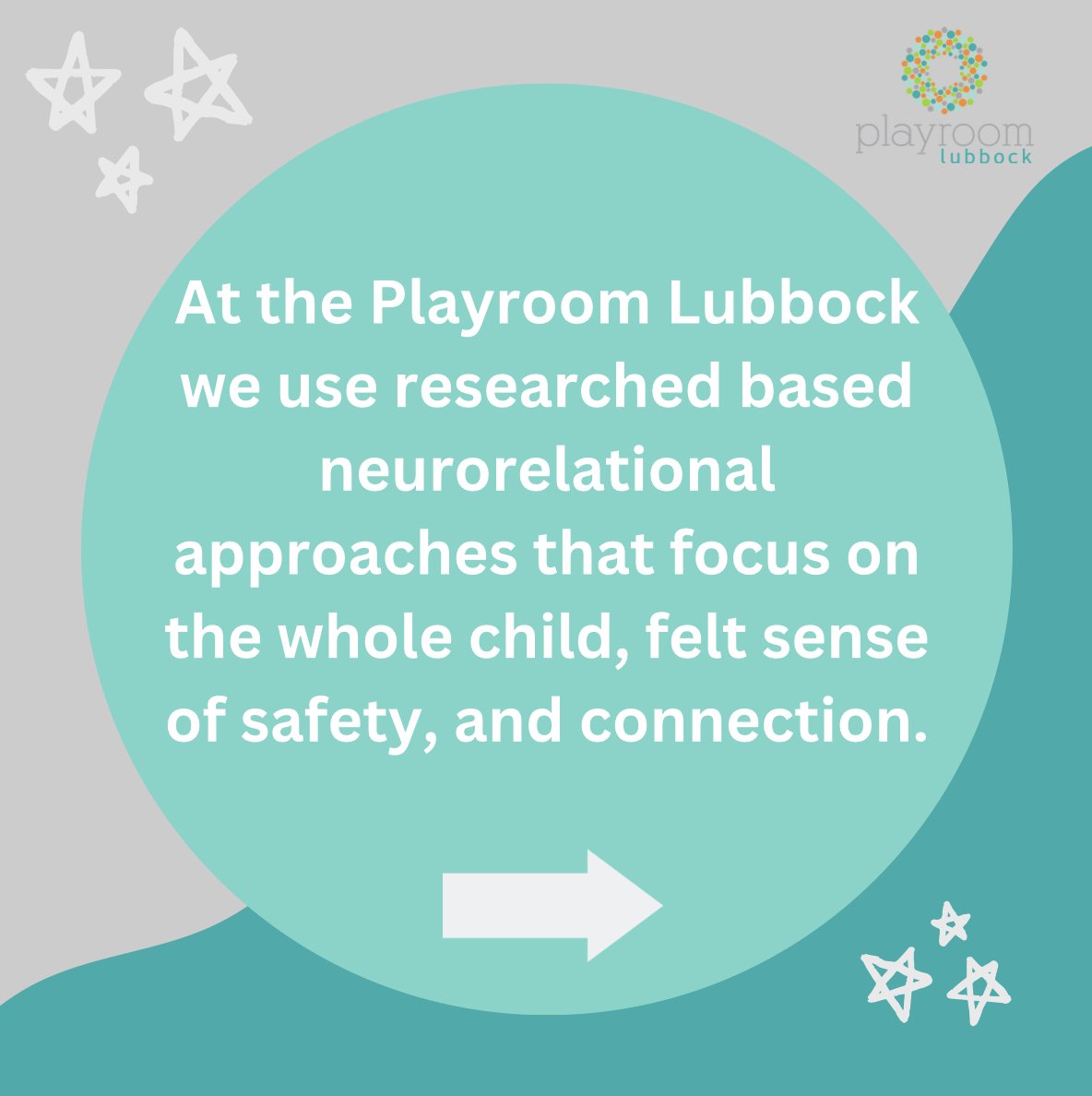
Science says it’s time for a change. Educator burn out says it’s time for a change. Behavioral challenges in the classroom says it’s time for a change. There are ways to build accountability, empathy, and persistence in students—and the basic foundation is SAFETY in relationships.
Do you want sustainable behavioral changes?
Expanding academic capacities?
Optimizing learning and memory?
Improved mental health for both educators and students?
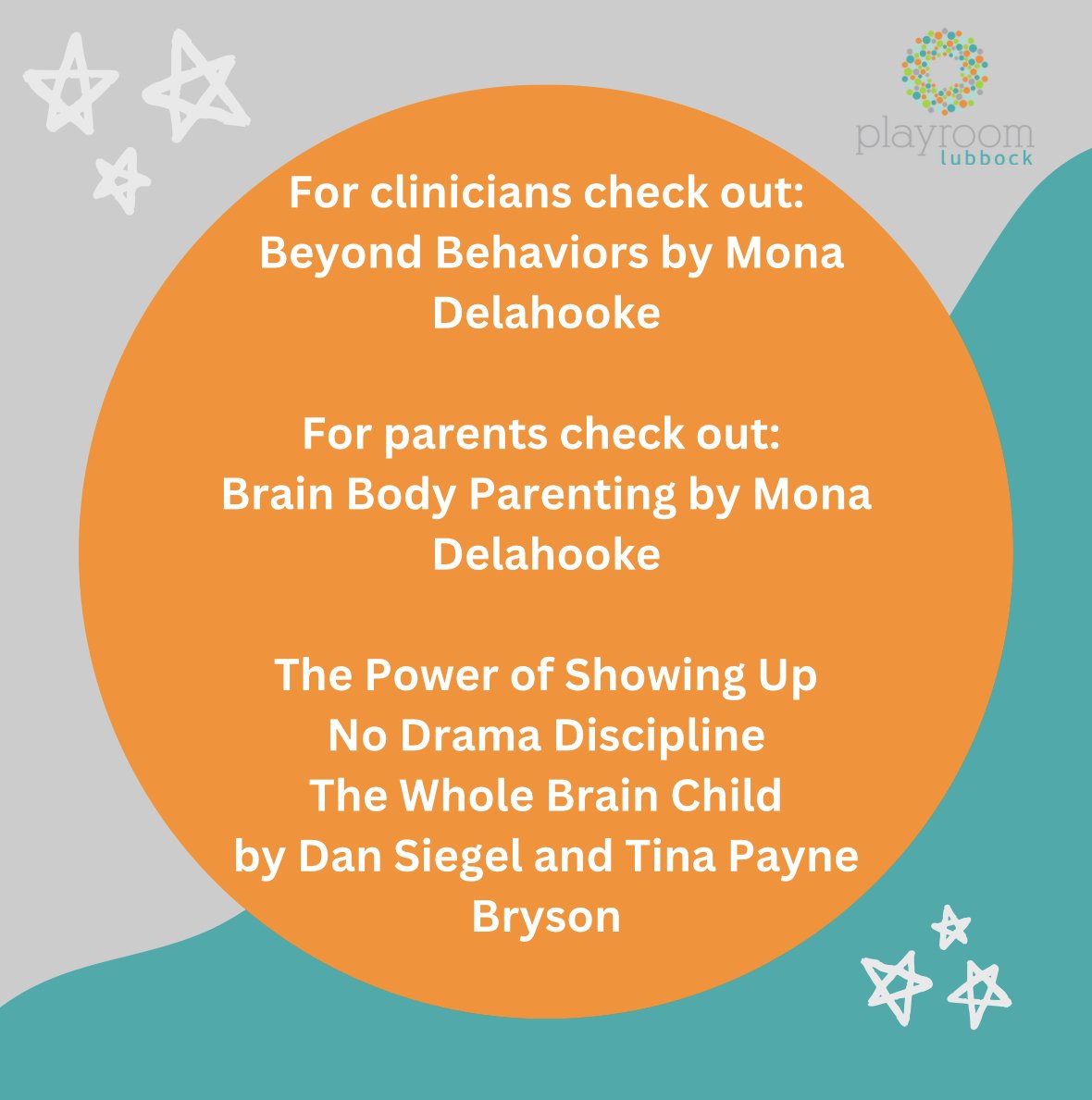
“Our education system is working from a model that views behaviors in isolation of the child’s body, mind, and relationships.” Mona Delahooke
Ask me about our “Integrating Neuro-Relational Approaches into School Culture” workshop customized for your campus and tailored to meet both educator and student needs and well-being. Presented by Kelly Martin, MEd, LPC-S, RPT-S, she guides participants in both an experiential and didactic learning environment.
The “Integrating Neuro-Relational Approaches into School Culture” is best suited for a 6 hour learning experience for teachers, behavior support staff, and school counselors. Abbreviated versions can be adapted for administrators and other stakeholders in a 3 hour workshop.
Contact Kelly Martin for a quote: kelly@playroomlubbock.com
Kelly Martin is a dedicated and skilled Licensed Professional Counselor Supervisor and Registered Play Therapist Supervisor with an exceptional 16 year tenure in the mental health field. Kelly possesses a strong teaching background serving as a current adjunct professor at Lubbock Christian University in the Psychology and Counseling Department; a sought after workshop presenter and group facilitator who has facilitated over 26 professional workshops and 2 group backpacking trips in the wilderness; a previously certified Texas educator with 3 years of classroom experience; and a previously certified Texas School Counselor with 4 years of elementary school counseling experience. She is a certified Level One DIR Floortime clinician. DIR Floortime is a multidisciplinary model most commonly used with children with educational, social emotional, mental health, and/or developmental challenges.
Kelly’s enthusiasm for child well-being is evident through her private practice at the Playroom Lubbock, where she counsels and uses play therapy with children and adolescents; supervises counselors in training; and provides support to parents and caregivers. Her dedication to understanding and advocating for children's needs underscores her passion for fostering positive growth and connections in their lives.
Kelly’s unique blend of experience, education, supervision and experiential training positions her to continue making a meaningful impact in the field of education and counseling.
“Everyone I know starts again sometime in life. It is learning to accept the endings, to embrace the new beginnings, that makes all the difference. ”
In the 16th century the pages of a book were referred to as leaves. This phrase and metaphor has been used since the 1500s to referring to changing course, starting afresh, writing a new page. Turning over a new leaf, whether intentional or forced, offers up a challenge: "to recognize that the circumstances of life are much less important than what we learnabout what it means to become fully human because of them." Joan Chittister in Called to Question: A spiritual memoir.
"If i set my eyes on who i am becoming,
i can submit to the process of change
and commit to work
on my passions
on my capacities
on my mind
and on my body.
and, so long as i breathe,
that commitment to next steps and newness
can last."
~ Justin McRoberts
The wilderness has become part of my (Kelly's) most recent pages. I have expanded my love of hiking and the outdoors to backpacking and camping. This summer I co-facilitated a women's backpacking trip with TrailBound Learning Co founder, Kayli Cross. In the backcountry of Colorado, 7 women and 1 dog covered 26 miles over 4 days of learning, stumbling, and gracefully connecting.
Three Weeks later I headed back to the Colorado wilderness except I brought my two sons to backpack in the San Isabel Forest and to raft the Arkansas River. Kayli, as the best therafriend she is, accompanied us with her dog Levi!
With this new leaf, "courage running wild" was written on our pages. It takes courage to adjust expectations. To adapt. To realize all that lays before you and to dig deep with your feet, your soul, and your paddle or pole. It takes courage to look up and breathe in the expansiveness around you. To question. To be fully exposed both on a mountainside's edge and fully exposed within the limits of your humanity with all your rawest reactions and physical needs. Courage runs wild to yield to rest. To allow joy and pain to cohabitate. To surprise yourself with possibility. To trust and lean on a rock or another living breathing being. Courage runs wild when you take the (bee) sting from out of nowhere and return to that place as your only means of returning "home." Courage runs wild when you say yes. When you say no. When you pause and wait out the storm.
Courage runs wild when you poop in the forest. I said what I said.
"Every ordinary thing is infused with mystery." Barbara Holmes
How does courage run wild for you?
Parenting, caregiving, and teaching young people has a way of bringing us to terms with our own humanity (our strengths, desires, limitations). We invite you to turn a new leaf (page) in how you show up in the roles you serve in and the experiences you share with young people.
Here's a little guided practice--one that Kayli and I used with the participants on our women's backpacking trip. Find a piece of paper/journal and a writing utensil. It just makes this whole "turning over a new leaf" thing more tangible.
Sit with these prompts and jot down a few words to complete them.You decide how to interpret each prompt.
I intend...
I bring...
I have...
I need...
And finally, I will leave you with some photos from backpacking and camping in the Rio Grande and San Isabel National Forests. Perhaps you’ll discover something mysterious in each of them!
































There’s a road of development that we walk along throughout our lives. We start before we ever enter this world, weave our way through childhood and adolescence, and end up somewhere in adulthood (though that’s not the end of lifespan development!). Infancy and childhood is marked by significant brain and body development, beginning to learn how the world around us works and what our role within that world is. In adulthood, while our brain and body development are on their way to being complete, we find ourselves in a continuation of that lesson in understanding the world and our role in it, further solidifying our identities. While childhood is marked by great dependence on caregivers for our needs, adulthood is often quite the opposite; adults might find themselves in much more autonomous situations, making significant decisions for their own lives and having a grounded sense of self.
“Adolescents find themselves craving autonomy and independence from their parents while at the same time, longing for the simple pleasures of childhood.”
In the middle of this road is the journey of adolescence. Adolescents, as defined by Oxford Languages, are “in the process of developing from a child to an adult”. As straight forward as that sounds, it’s a dance of growing out of dependence from childhood and into one’s own independence and identity. Adolescents find themselves craving autonomy and independence from their parents while at the same time, longing for the simple pleasures of childhood. Adolescents are forming their own opinions about their lives and the world and yet, are still operating under their parent’s or guardian’s house/family rules and structure.
In order to move in step with an adolescent in this developmental dance so to speak, let’s first take a look at what research tells us is going on developmentally between the ages of 10-19 years old. Looking at lifespan development when working with teenage clients helps me, as a clinician, understand what’s going on in their brains that could be contributing to the choreography of their thoughts, feelings, and actions. Author, play therapist, and professor, Dee Ray tells us that 10 year olds typically think concretely and logically, have a “strong sense of right and wrong”, (from her book Therapist’s Guide to Child Development) and seek out emotional support through friendships. This age really seems to be the bridge for a lot of children between childhood and adolescence. We, as adults who interact with children regularly, see our 10 year olds choosing peer values over family values as this is the stage of development where they are really forming deeper relationships with their peers.
Erik Erikson’s research on development aligns with this, through his Stages of Psychosocial Development. Erikson tells us that the stage of development for ages 5-12 is called Industry vs Inferiority. Our older kids in this stage are finding that their peer groups are becoming a major source of their self esteem. Children in this stage seek situations that help them achieve their goals. When children are successful in this, they feel a sense of industriousness whereas when they “put themselves out there” and are met with failure, they feel a sense of inferiority. The next stage, Identity vs Role Confusion is where our teenagers land. Individuals in this stage want to belong in society and are learning the “roles they will occupy as an adult”. This isn’t to say that we don’t continue shaping our identity well into adulthood, rather, this is the time we really start putting it all together and having a deeper understanding of ourselves. The hope for the end of this stage of development is that the individual will have a deeper sense of self, their values and beliefs, and how all this works together as they find their place in society.
With this developmental information in mind, let’s consider what our preteens and teens might want us to understand about their lives. In my experience working with this age group, here are some things our teenagers want us, the adults in their lives (parents or guardians, teachers, counselors, etc.) to hear and understand about them.
Being a teenager is both invigorating and at the same time so wildly tough. Teens are living in a world unlike any world their surrounding adults grew up in. With smartphone technology and instant access to world news, our teenagers are inputting significant amounts of information about the world around them. Teens want to be in the know about what’s happening across the globe, and at the same time, feel frightened by all of that information. They want to feel that there’s something they could do to make an impact and also want to know that they are safe. Having conversations with your teens, in age appropriate ways, about what’s happening in the world and what their views are on such events, can make them feel included and valued for their opinions.
It doesn’t feel good to be yelled at. Human beings are wired with a beautifully intricate nervous system, a network of neural pathways that does all kinds of things for our bodies, including signals to our brains when we feel threatened. Our nervous system might feel threatened when someone we’re interacting with raises their voice or clenches their fists. Finding a way to interact with teens, whether setting a boundary or expressing one’s own feelings about a situation, in a calm, emotionally regulated manner, may help interactions stay positive and your child more responsive. Taking a break from a heated conversation to splash some cold water on your face or sitting down and taking some deep breaths can help soothe your own nervous system and help you come back to the conversation with your teen in a more balanced state. “You know, my body is telling me it’s time to take a break. I’m going to go splash some cold water on my face, take a few deep breaths, and I’ll be back to check on you.” This models a way to advocate for yourself when needed and that you’ll be back to finish the conversation when you’re more able to stay present and receptive, rather than hot, angry, and reactive.
Finally, your teenager might want you to know that being in this stage of life is conflicting at times and they’d like support, whether they verbalize that or not. They want to be ‘grown up’ and independent and they also want life to stay the same, or even, for it to go back to the way it was when they were little. They want to relish in the freedoms and mature responsibilities that come with being a teenager and yet they also want to soak up as much of their childhood as possible before it’s over.
This road to adulthood is bumpy and often unpaved, sometimes the signs don’t make sense and sometimes they’re missing altogether. Sometimes all you want is to trudge forward, without looking back. Sometimes you’d like to find a nice log to sit on and just take a break. And other times still, you wonder if you’re allowed to go back. Having trusted and safe adults, along with some stellar friends, in one’s adolescent life to walk alongside you, makes the road a bit more manageable, navigable, and hopeful.
“ It’s dangerous business, Frodo, going out your door. You step onto the road, and if you don’t keep your feet, there’s no knowing where you might be swept off to.
”
By: Katy McAlpine, MEd, LPC
Katy is a Licensed Professional Counselor at the Playroom Lubbock specializing in adolescent and young adult mental health.


Discussing an evaluation process/procedure in advance can help put your child at ease.
The functional age of your child may determine how much, when, and in what way you discuss an evaluation, procedure, medication, diagnosis, or disability.
Use simple straightforward language.
Discuss any concerns your child might have as a result of the evaluation/appointment. Normalize feeling scared, worried, or confused and that it is okay to express those feelings even for experiences that may not be scary for some children.
Follow your child’s lead about how much he or she wants to talk.
Consider using an established special code word for your child to use to indicate discomfort, pain, or something your child needs you or a provider to know.
Consider creating a visual “wait card” sign that your child can use during an appointment to indicate a need for a pause in conversation. Wait card signs can be personalized with your child’s picture or graphic/character of interest.
Whenever possible, use terms and images suggested by your child as long as they are not denigrating
If your child asks questions, keep your answers short and to the point
If you’re not sure how to answer a question, just say, That’s a very good question. Let’s write it down and ask your doctor/the therapist at our next visit
For some children, similes work best. For example, ADHD is like if your pause button only works some of the time.
For some children, using play, toys, drawings, or books can help guide a conversation and express feelings
Be careful not to let your own anxiety propel you to provide too much reassurance or express too much concern.
Explain the changes they can expect. (Side effects, change in routine, etc..). When you explain changes, it sends a message that you are aware, attentive, and can be trusted to handle this with them.
Keep check-ins brief following an evaluation, procedure, introduction of medication
Use positive language. Consider using the words “help” instead of “can’t”. For example, “hearing aids help you hear.”
Older kids are usually aware of what’s hard for them and why they’re being evaluated, especially if you’ve had ongoing conversations about it.
When applicable, be factual and descriptive. We can name specific types of disabilities and medical conditions or use general terms such as disability or disabled.
The most essential guideline for disability language is to use whatever words each individual disabled person prefers. Don’t use the terms “handicapped,” “differently-abled,” or “special needs”
During appointments make a point to turn to your child and address your child directly. Model talking to your child rather than talking about your child. “The Doctor wants to know how you describe ___________. What are your thoughts on that?”
Depending on the circumstance and respect for privacy, consider who needs to be told about your child’s evaluation, disability, or medication. Who is involved in your child’s system of support? What information do they need to know? How can you facilitate communication among providers or disseminate information to providers?
“You know how sometimes it’s hard to ____________(focus, pay attention, stay calm, etc)? Use whatever words—or describe whatever situation—you think will be mostly meaningful to your child.
“It is a way for us to come up with a plan that will support you in your ________(learning/growing/day to day needs).”
“Sometimes behavior/intense feelings isn’t a choice. It’s a reaction to what your brain is telling you.”
“Doctors have medicines for all kinds of things to help people.”
“Hey, since you’ve been taking the medicine/going to therapy, do you notice anything different? Do you think it’s helping? Anything you don’t like about it?”
“We are all different in some way and that we all do things every day to adjust to our unique circumstances.”
“What are some ways in which we are similar?”
“The assessment/evaluation isn’t really a test but a series of activities. Some of them could be fun. You won’t get a grade and can’t fail—even if you don’t know the answers to some of the questions or how to do an activity. Try your best because the evaluation will help us understand how ________ (you learn best or how your brain and body work). We might even find out if you’ll get to work with other teachers or specialists who are trained to help kids with specific things.”
“What plan can we come up with together about ________(how to ask for help, how to take medication, how to prepare for the appointment etc)?”

As a parent and investor of your time and money in a mental health intervention such as play therapy, you may have some questions around why a counselor playing with your child is helpful. Play therapy is an experiential process which means that a child develops these capacities through the experience: the therapeutic relationship, therapist’s verbal and nonverbal responses, unconditional positive regard, and co-regulation.
There are 4 essential categories of the therapeutic powers of play
Increases Personal Strengths:
Play offers children creative ways to solve problems, enhances moral and psychological development and resiliency, and promotes self-regulation and self-esteem. The therapist builds the child’s capacity for regulation and emotion expression by modeling self-regulation and emotions intelligence skills. These skills then generalize into everyday life. By providing the child with complete acceptance, the therapist builds the child’s view of self and fosters positive self-esteem and self-confidence.
Enhances Social Relationships
Through the therapeutic relationship, play builds social competency, attachment, and empathy.
Facilitates Communication
Play gives voice to self-expression, allows access to unconscious thoughts, and allows for direct and indirect teaching. Play is a medium for self-expression. What children cannot say with words, they show us through play. Often children find it difficult to articulate or express emotions and challenging experiences. Play allows them to do this in their most natural language: play.
Fosters Emotional Wellness
Play gives children space to play out emotions or experiences that they are struggling with.. Both positive and negative emotions are expressed, promoting stress management and overcoming fears. The therapist supports the child to process these experiences in a healthy way.
More specifically , how does it work?
A Child Centered Play Therapist doesn’t suggest that clients play with a certain toy or work on a presenting problem. Instead, play therapists offer warmth, empathy and a gentle structure for clients to make their own meaning through the exploration and play they chose to engage in. Play reveals a child’s internal emotional world. Children have a unique voice in the playroom which doesn’t always include words. Roughly 70 percent of a play therapist’s work is nonverbal and 30 percent is verbal. When play therapy practitioners do speak, it is typically to offer reflection and encouragement on the play they are observing or to offer guidance such as setting limits.
Skilled play therapists can recognize play themes that reflect the child’s emotional needs and use them to help process their concerns. Play therapists respond to play themes, often saying back to the child what she is doing. Children appropriately interpret this as permission to continue, and delve deeper. It also promotes emotion regulation and mindfulness as the therapist attunes to the child, attends to the present, and pairs language with actions, thoughts, and feelings to facilitate integration.
Even though the reason that brought the child to therapy may not be that specific play scenario being played out, a skilled therapist uses a child’s play to address underlying feelings such as helplessness, fear, or anger. As their play moves through specific stages, emotions become less overwhelming, and many families note that behavior outside of the sessions improves.
*Not an actual client pictured with Kelly Martin, child counselor and play therapist.
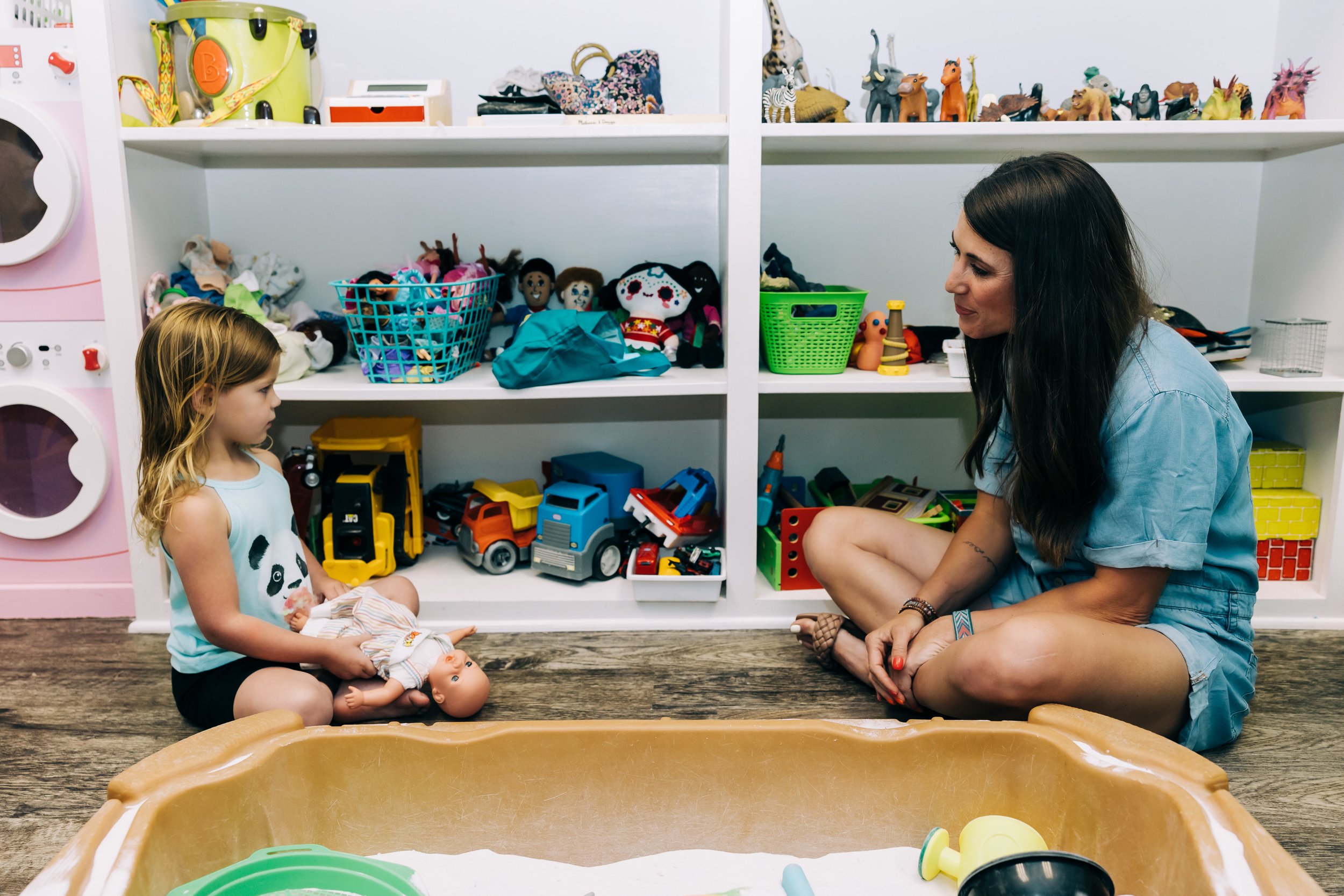

Play therapy is an evidence based practice for children and adolescents and has many techniques for counselors to perform. (Bratton & Ray, 2000; Bratton, Ray, Rhine, & Jones, 2005; Gallo-Lopez & Shaefer, 2005; Roaten, 2011).
Working with a teen is very different than working with an adult client due to biological, developmental, and psychosocial tasks. Developmental tasks of teens include: physical maturation, sexual relationships, peer groups, emotional development, formal operations cognitive development, and identity development.
Because of the development of formal operational thought, preteens often vacillate between play that is more common to younger children and activities that appeal more to teenagers.
Play therapy can benefit preteens and teens struggling with depression, abuse, grief, addiction, adoption, ADHD, trauma, family stress, anxiety, relationships, problems with peers, identity, self-esteem, sensory processing issues, body image, anger issues, parent’s divorce, autism, etc.
Rather than teens doing therapy, they EXPERIENCE therapy. It is an opportunity to safely distance the self from problems through activity, creativity and imagination. Using a teen’s interests through play, sandtray figures, and expressive techniques will stimulate the teenager's desire and need to be expressive and create identity--which is central to this developmental stage. The positive therapeutic relationship that develops between a teenager and a counselor brings healing, forward movement, and relief of emotional stress.
Expressive arts are a great tool to address new thoughts and feelings or communicate and rework perspective. It can include art, music, or movement such as yoga or dance.
Games and activities can be used to deal with anxiety, power and control issues, self-esteem, relationships and difficult behaviors.
Sandtray invites adolescents to explore the uncertain world between childhood and adulthood and to explore the internal world and subconscious in a creative way by choosing miniature figures to place in a tray of sand. Sandtray allows clients to become mindful and allows clients the opportunity to blend memories, fantasies, wishes, and emotions without verbal constraints. (Rae, 2013)
““Appropriately structured creative art activities provide preteens with opportunities to change perceptions about self, others, and the world as they try out new roles and solutions...Furthermore, [they] facilitate a process of self-development, providing the preadolescent with the inner resources to cope with future difficulties.”
”
Group therapy is quite effective for making friends, improving communication skills and learning coping skills from peers who experience similar challenges. When the opportunity is available to pair 2 or 3 preteens or teens, group activity therapy can be beneficial.
Trained play therapists can use play therapy with tweens and teens to
Informally assess a client’s psychosocial and psychological functioning
Build rapport
Explore and facilitate expression a client’s inner world and emotions
Build skills through psychoeducation
Develop mastery, identity, and empowerment
Relieve a client of stress

What is Play Therapy? What is Activity Therapy?
Play Therapy is to kids what counseling or talk therapy is to adults. Children use play as their natural language and the toys are their words. Play therapy allows a child to change the way they think about, feel toward, and resolve their concerns.
For older kids and teens, the counselor will use activities, games, arts, crafts, and sand tray therapy to provide a non threatening means of communication. The activities are selected to help meet treatment goals, although the client is free to carry out the activity or interpret the activity in a way that best fits his/her needs and interests.
Why Play Therapy?
Play Therapy is effective for a wide variety of problems or concerns that affect or will affect the way a child functions at home, at school, or in the community. Child counselors can be and should be specially trained to strategically use play and specific toys to address a child's needs when the child does not have the verbal language to express their thoughts and feelings. The positive relationship between a therapist and child during play therapy can provide an experience that promotes well being and leads to emotional healing.
Play therapy demonstrates significant effectiveness for children and behavioral and emotional challenges. You may read more about play therapy as a successful evidence based practice here.
Who Can Benefit from Play Therapy?
Play Therapy is especially appropriate for kids ages 3-12. For older kids and teens, play provides a safe distance from problems and allows expression of thoughts and feelings. Play techniques for older kids and teens include sand tray therapy, expressive arts (painting, drawing, creating, sculpting, acting, singing), or activity therapy (constructing, building, balls, games, etc.)
What can play therapy do for my child?
Develop responsibility for behaviors
Develop problem solving skills
Learn to communicate with others
Develop respect and acceptance of self and others
Stimulate creative thinking and exploration
Express emotion
Relieve stress
Cultivate empathy
Enhance social skills
Develop assuredness about personal abilities
How long does my child need play therapy?
Each child comes at his/her own pace and with his/her own needs. Therefore, the length of counseling varies. Once the therapist attends an initial parent consultation with the parent/caregiver and it is established that the child will begin play therapy, the child needs sufficient time to develop a trusting and warm therapeutic relationship with the therapist in order to feel safe enough to express to the therapist through toys, sand, or expressive arts, his/her child's world view and perceptions of experiences. The amount of sessions a child attends may range from 4-12+ sessions.
What is the process?
Parent Consultations
During the initial parent consultation (without the child), the parent will have the opportunity to share concerns and background information about the child. The counselor will explain the therapy/counseling process and procedures and will provide a few forms to sign.
Parent consultations (again without the child) will continue every 4th session. These consultations allow the counselor to address the parent's concerns, allow parents to have a better understanding of the child, allow the therapist to share information about the child without breaking confidentiality, and allow both the counselor and parent to communicate progress. It’s a wonderful opportunity to collaborate with parents/caregivers in their efforts to support their child.
Play Therapy Sessions
These sessions are typically 45 minutes in length and may include play therapy, expressive arts, sand tray therapy, or activity therapy in a designated Playroom. The duration of counseling varies from child to child. Individual play therapy sessions include one child and the counselor. Group play therapy sessions include 2-3 children and the counselor.
The Association for Play Therapy outlines the stages of play therapy which helps inform parents of what to expect and guides play therapists during the process. You may read about them here.
What is a Registered Play Therapist?
An RPT is a licensed mental health professional specifically trained in employing the therapeutic power of play. We have extensive training and supervision in play therapy and child development, plus we are already licensed mental health therapists! We receive our RPT credentialing from the Association for Play Therapy (www.a4pt.org).
How does Play Therapy Work?
A Child Centered Play Therapist doesn’t suggest that clients play with a certain toy or work on a presenting problem. Instead, play therapists offer warmth, empathy and a gentle structure for clients to make their own meaning through the exploration and play they chose to engage in. Play reveals a child’s internal emotional world. Children have a unique voice in the playroom which doesn’t always include words. Roughly 70 percent of a play therapist’s work is nonverbal and 30 percent is verbal. When play therapy practitioners do speak, it is typically to offer reflection and encouragement on the play they are observing or to offer guidance such as setting limits.
Skilled play therapists can recognize play themes that reflect the child’s emotional needs and use them to help process their concerns. Play therapists respond to play themes, often saying back to the child what she is doing. Children appropriately interpret this as permission to continue, and delve deeper. It also promotes emotion regulation and mindfulness as the therapist attunes to the child, attends to the present, and pairs language with actions, thoughts, and feelings to facilitate integration.
Even though the reason that brought the child to therapy may not be that specific scenario, a skilled therapist uses this a child’s play to address underlying feelings such as helplessness, fear, or anger. As their play moves through specific stages, emotions become less overwhelming, and many families note that behavior outside of the sessions improves.

According to Dr. John Gottman (who by the way has 40 YEARS of research), people make attempts to get attention, affection, or acceptance. It is a bid for emotional connection. “Will you play with me?” is an obvious bid, but not all bids are so clear. They can be verbal or nonverbal. How we respond to our child’s bids has a great impact on our connectedness with our child and how they learn to connect with others. Bids can be positive (turning toward), negative (turning away), and no response (turning away). By giving a positive, loving response to the bid no matter what form it comes in, can fill your child’s emotional bank. Here are 25 ways to promote connection with your child:
Look your child in the eyes when they are talking. Be attentive.
Verbally acknowledge all feelings. “You’re disappointed it worked out that way.” “You’re angry she took that from you.” “You’re feeling lonely and want my attention.”
Listen to hear your child
Connect before correct. Come with intention, listening, and patience.
Ask them about their favorite things.
Notice something new/different about them.
Give a ‘yes’ answer. “Yes, I would love to. Give me about 5 minutes to finish this up.” “Yes we can schedule that after this…”
Use “How come?” instead of “Why”
Be fun and act silly
Be ready for mistakes and brush them off
Show affection (hug, high five, cuddles, shoulder squeeze, written note, loving text message)
Put away distractions
Be concerned about what they are concerned with—even if it seems trivial
Say “yes” to play
Greet with enthusiasm- in the morning, after school, or after any extended separation.
Give a 30 second burst of attention. Pause what you’re doing and give 30 seconds of undivided attention.
Laugh about things at the same time
Tell a story about your child
Look at family photos together
Watch their favorite show or movie
Create Something together
Spend extra time at bedtime
Say something you love about them
Go for a walk
Listen to music together in the car
We as adults often wonder how to best communicate with the tiny humans in our lives, whether they are our own children, nieces or nephews, our best friend's kiddos, or the kids we work with on a daily basis. Each child communicates in a way that works best for themselves and how they are developing and it can be difficult to understand what they are needing or wanting from you as an adult. Being able to communicate effectively with the tiny humans in our lives is essential to them feeling heard and understood.
The book, How To Talk So Kids Will Listen & Listen So Kids Will Talk by Adele Faber and Elaine Mazlish, is a helpful tool to understanding the intricacies of childhood communication. It also contains helpful and amusing cartoons that show healthy and effective communication styles. In this article, I will review and highlight some important pointers from the book that may help you understand and communicate more effectively with the tiny humans in your life.
The first thing the book talks about is helping children deal with their feelings. Feelings are part of everybody's everyday life and it shouldn't come as any surprise to know that children experience emotions just like we do. They are going through a whole new experience in life: constantly changing, growing, and developing. These new experiences can be really exciting but often also really overwhelming. One of the authors writes, "steady denial of feelings can confuse and enrage kids". When learning to communicate with children, it is essential to listen to what they are feeling.
Our authors suggest four tips on helping with feelings and they include:
1. Listen with full attention 2. Acknowledge their feelings with a word: "oh, I see, mmhmm" 3. Give their feelings a name: "you're feeling angry", "you're feeling sad" 4. Give them their wishes in fantasy: "you wish you could go take a nap right now because you're so sleepy"
While, given certain situations, these tips may not be easily employed, they may be a good place to start.
Another topic the book talks about is engaging cooperation. Sometimes, it can feel useless asking or telling your child to do something you want them to do. You try every means of communication you know and they still don't listen or obey. So how do we get our kiddos to listen to us and cooperate with what we are trying to say?
Faber and Mazlish list some tips here to help engage cooperation:
1. Describe what you see or describe the problem: "the light is on in the bathroom" 2. Give information: "walls are not for writing on, paper is for writing on" 3. Say it with a word: "Jill, your lunch!" (in this instance, less is more) 4. Talk about your feelings: "I feel so frustrated when I start to say something and can't finish." 5. Write a note: written on the bathroom mirror "Help! Hairs in my drain give me a pain!"
Engaging with the children in your life at any age allows them to feel heard and gives them the space to learn how to work with you.
Learning these and other communication tips can be helpful in understanding your children and working with them in a healthier manner. Every child desires to be heard and every adult wants to be able to understand them. If you are a parent or an adult who works with or interacts with children regularly, you might find books such as this one helpful in communicating!
The women who wrote this book also wrote one on interactions with teens called How To Talk So Teens Will Listen & Listen So Teens Will Talk. A lot of the same communication skills are written about but from the perspective of talking to teenagers.
Reference: Faber, A., & Mazlish, E. (1999). How to talk so kids will listen & listen so kids will talk:with a new afterword: "the next generation" by Joanna Faber. New York: Scribner.


There is a message in the misbehavior of hitting and biting. It's normal for toddlers and preschoolers to have difficulty managing big feelings and impulses. Often times we misinterpret a child's aggression as being intentional or an attempt to manipulate. Instead, look at aggression as your child's way of communicating. Our young people are still developing vocabulary and do not have the skills to sophisticatedly express overwhelming feelings. Hitting and biting can be a child's way of saying "I need space!" or "I'm jealous that you are playing with that!" or "I want to make my own choices!" Biting may also be an attempt for a child to experiment and test his body's capabilities.
1. React calmly. When you witness or hear about your child hitting or biting, your first reaction may be tensing your body, heart racing, or your face feeling hot. Breathe and exhale and gently move your child away from the situation. Attend to the child who was hurt with empathy and tenderness.
2. Prepare. Watch your child carefully and take mental notes of things that seem to make your child feel stressed, overwhelmed, frustrated, or sad. Look for patterns such as in transitions, time of day, and other triggers such as overstimulation. Frequent biting in toddlers and older children can often be related to sensory processing issues and an attempt to receive oral stimulation.
3. Use empathy. Use feeling words to build your child's emotional vocabulary. "You're so disappointed that it's time to go!"
4. Set the limit and teach. "You wanted a turn on the slide. Your hands are not for hitting. Next time you can say, Can I have a turn please?" or "No biting-biting hurts! Teeth are for food!"
5. Redirect: Sometimes our children need our support to make a healthy choice. It may mean gently intervening mid-swing at another child. Try using humor and being light hearted "Woah, we're not painting on people today silly, only paper!" Find an alternative for a child to bite when she feels the urge: chewies, ice, biting blanket.
6. Repair. Many natural reactions are to follow up with punishment, but instead, use this time for connection and learning. Give a hug. Sit quietly for a few minutes. Evaluate your child's needs: hungry? tired? Once your child is calm, talk about what happened by putting feeling words into the situation. Forced apologies are meaningless. Build empathy in your child by asking him or her what might make the hurt child feel better.
7. Use connection. If you feel your child is acting aggressively for attention or connection, give him lots of undivided attention throughout the day. Read a book, draw together, allow your child to help with simple tasks, create special moments together.
8. Consider speech and language milestones. Often times a child feels frustration in communication. Is your child meeting his milestones in speech and language?
9. Repeat: Spending time helping your child build the skills and vocabulary is time well spent. Healthy habits may take time to develop.
(Tips compiled from imperfectfamilies.com; Ages and Stages in Parents magazine).